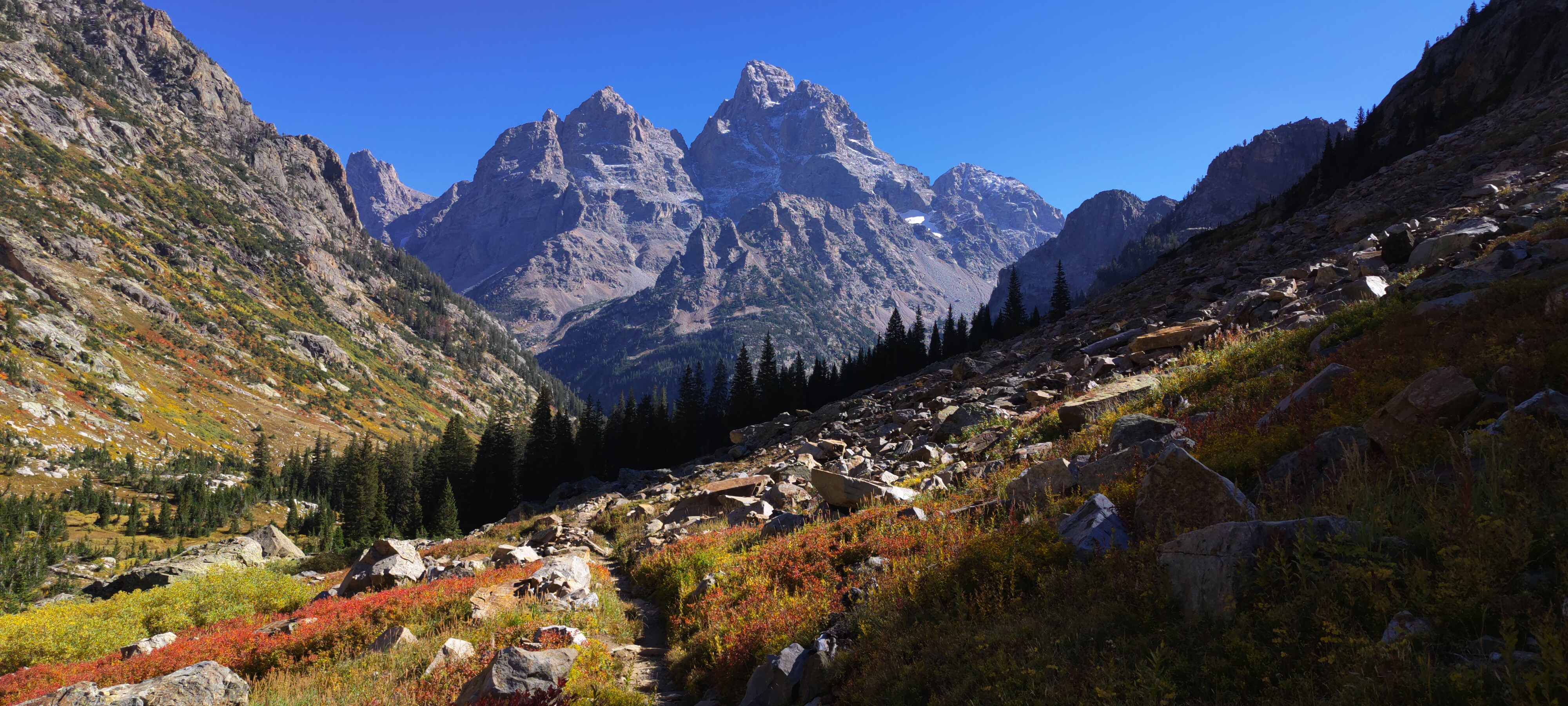
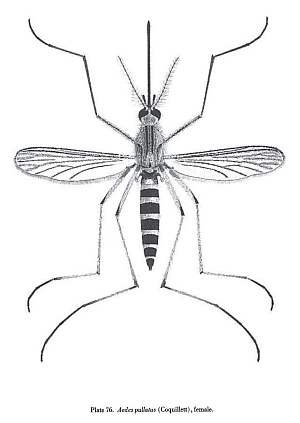
To appreciate the mosquitoe and its reputation as the "apex predator" of the Winds, it helps to know a bit about the geology. Imagine the Winds as a big, thick pancake topped with a generous pile of whipped cream, all situated in the middle of the high plains of western Wyoming. The pancake represents the skirt of impervious bedrock from which the peaks (whipped cream) rise. Add some glaciation to carve canyons in the peaks and gouge out depressions in the bedrock to form a few hundred lakes, ponds and bogs. Once it warms up, allow a few thousand years more for the formation of some soil so grass, moss and sedges can take root and provide resting and hiding places for the bugs. Jump to the present, lets say July. The mountains and the surrounding skirt have been shedding their winter snowpack. The skirt is now mostly snowfree and the trails are navigable. Water fills every depression and saturates the thin ground cover. The eggs of "Aedes pullatus", (click on the image for more info) deposited in the waning days of the previous season have hatched and completed their larval stage, now emerging as adults from this mother of all watery nurseries. They are beside themselves with reproductive frenzy. Even if it still dips below freezing once or twice a week, the hardy little beast has had a million years to adapt to cold. They can often be found wriggling their way out of the thin skin of pond ice from the previous night's freeze. Within hours though, the casualties are a mere fraction of the growing multitudes of the newly-arrived which need only one thing to continue the cycle. The males are only there for the sex, but the females are out for blood. As if the overwhelming numerical advantage was not enough, Aedes has a sensory system like a stinger missle that not only detects heat but minute levels of CO2 as well. This is of course the definition of an overheated, panting backpacker, and against this ancient bioweapon, only DEET, a vile petrochemical capable of turning your sunglasses into a puddle of goo, and to a lesser extent the more benign Picardin have been found capable of effectively befuddling this system. Savvy folks will take a bug hat and even a netting tent that provides a portable no-fly-zone at camp or stops along the way. You can buy clothing that has been infused with permethrin, or get a bottle and treat your outer clothing yourself. Permethrin is a toxic insecticide. It works by poisoning the mosquitoes faster than it poisons you, so don't apply it to clothing worn next to your skin, and keep it away from your cat and your goldfish.